
Immunology
Below, we present our small-molecule immunology pipeline as of December 31, 2025. The pipeline includes one clinical-stage program, GLPG3667. We are currently evaluating all strategic options for GLPG3667, including potential collaborations and business development activities, with the aim of accelerating further development in dermatomyositis (DM) and potentially other severe autoimmune diseases.

TYK2 Small Molecule Program: GLPG3667
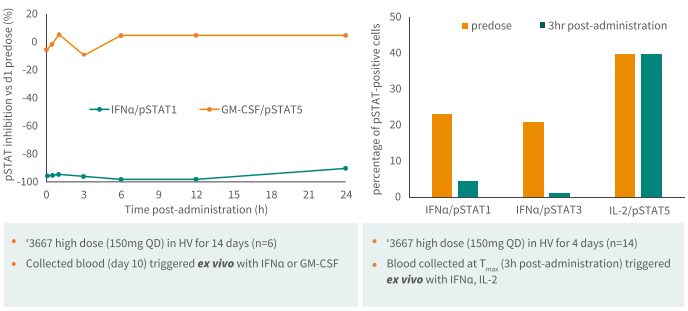
GLPG3667 is an investigational reversible and selective TYK2 kinase domain inhibitor that we discovered and evaluated in a Phase 1 healthy volunteer (HV) study in 2020. The Phase 1 study was a randomized, double-blind, placebo-controlled dose escalation study that evaluate safety, tolerability, pharmacokinetics (PK) and pharmacodynamics (PD) of single and multiple ascending oral doses of GLPG3667 for 13 days.
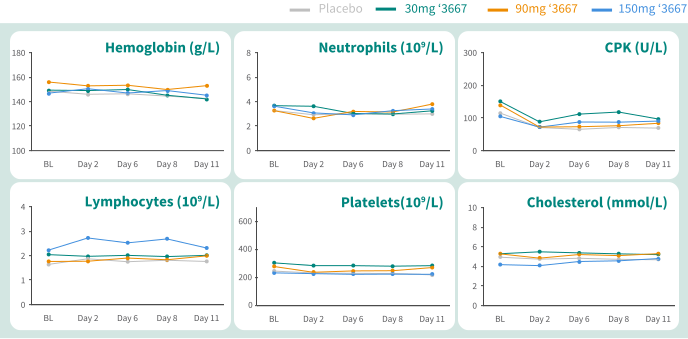
Blood was drawn at multiple time points on Day 1 and Day 10 of the study and was stimulated ex vivo with several cytokines, including IFNα, to analyze the level of inhibition of inflammation, including the effect on phosphorylated signal transducer and activator of transcription (pSTAT) signaling as well as on hematological parameters, lipids, and creatine phosphokinase (CPK) (see graphs below).
GLPG3667 is a potent, selective TYK2 inhibitor
No effect on hematological parameters, lipids and CPK
Following these results, we initiated a randomized, placebo-controlled, double-blind Phase 1b study in 31 patients with moderate-to-severe plaque psoriasis. Patients were randomized in a 1:1:1 ratio to a daily oral dose of GLPG3667 (low dose or high dose) or placebo, for a total of 4 weeks.
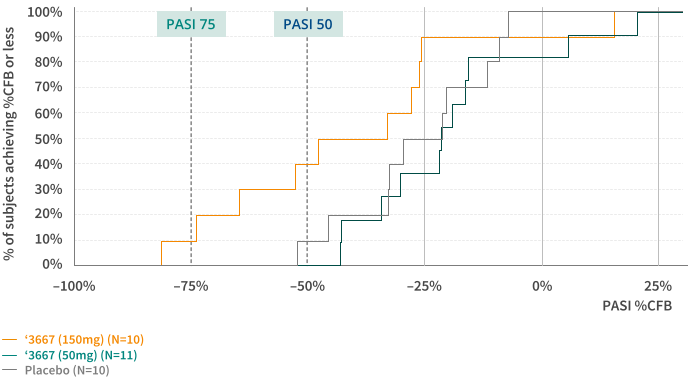
In July 2021, we announced positive topline results demonstrating that GLPG3667 was generally well tolerated with a positive response signal at Week 4 of the study (see graph below):
At Week 4 of the study, 4 out of 10 patients in the high dose group had a Psoriasis Area and Severity Index (PASI)50 response, defined as at least a 50% improvement in PASI from baseline, compared to one out of 10 subjects on placebo. There were no subjects with PASI 50 response on the low dose of GLPG3667. The 4 responders in the high dose group of GLPG3667 achieved a 52%, 65%, 74% and 81% improvements, respectively, in their PASI scores from baseline, while the subject randomized to placebo improved by 52%. Positive efficacy signals were also observed with the high dose for other endpoints, including affected Body Surface Area and physician and patient global assessment, versus placebo at Week 4.
Phase 1b psoriasis study with GLPG3667
Clinical activity at 4 weeks with once daily dosing
One subject in the low dose group interrupted participation in the study for one day due to exacerbation of psoriasis. The majority of treatment related adverse events (AEs) were mild in nature and transient. There were no deaths or serious adverse events (SAEs) in this 4-week study.
GLPG3667 in dermatomyositis (DM)
Idiopathic inflammatory myopathies (IIM) are a heterogenous group of rare autoimmune disorders primarily affecting the proximal muscles. They are characterized by severe muscle weakness, muscle enzyme elevations, inflammation on muscle biopsy, and extra-muscular manifestations. DM is the most common form of IIM and is characterized by inflammatory and degenerative changes of the muscles and skin. Early symptoms of DM include distinct skin manifestations accompanying or preceding muscle weakness. The quality of life (QoL) of patients with DM is impaired due to muscle weakness, pain, and skin disease activity.4 The overall mortality ratio in DM patients also remains three times higher when compared to the general population; with cancer, lung, and cardiac complications and infections being the most common causes of death.5 DM-specific prevalence has been estimated at one to six per 100,000 adults in the United States, and a recent analysis of 3,067 patients in the Euromyositis registry identified DM in 31% of the sampled patients.6 DM is a rare disease and with only one currently approved treatment, there is a high unmet need for alternative safe and effective treatment options.
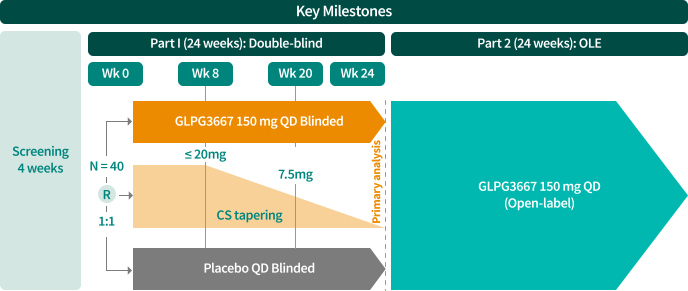
GALARISSO is a Phase 2 randomized, double-blind, placebo-controlled, multi-center study to evaluate the efficacy and safety of GLPG3667. A daily oral administration of GLPG3667 150 mg or placebo will be investigated in approximately 62 adult patients with DM over 24 weeks. The primary endpoint is the proportion of patients with at least minimal improvement in the signs and symptoms of DM at Week 24 according to the American College of Rheumatology (ACR) and the European League Against Rheumatism (EULAR) criteria.7
GALARISSO Phase 2 study design with GLPG3667 in DM
On December 18, 2025, we announced topline results from the GALARISSO study, which are summarized below:
The GALARISSO DM study met its primary endpoint, showing that GLPG3667, administered once daily at 150 mg (N=21) in addition to standard-of-care therapy, achieved a statistically significant clinical benefit in the Total Improvement Score (TIS) at Week 24 (p=0.0848; Δ: 14.26), compared to placebo (N=19). The pre-specified threshold of statistical significance was set at 10% (α=0.1). GLPG3667 also showed meaningful clinical improvements compared to placebo on several secondary endpoints of disease activity, including TIS20, TIS40, TIS60 and m-CDASI-A8. GLPG3667 demonstrated a favorable safety and tolerability profile throughout the 24-week treatment period.
As part of our ongoing efforts to maximize the value of this program for both patients and our shareholders, we are evaluating all strategic options. These include potential partnership and business development opportunities to accelerate development of GLPG3667 in DM. Additionally, we continue to explore opportunities to expand into other severe autoimmune diseases with significant unmet medical need.
GLPG3667 in systemic lupus erythematosus (SLE)
SLE is a chronic, inflammatory, autoimmune disease affecting nearly every organ system and thereby one of the most heterogeneous illnesses treated by physicians.9 The pathogenesis of SLE is characterized by a global loss of self-tolerance with activation of autoreactive T and B cells. This leads to the production of pathogenic autoantibodies that primarily target a variety of nuclear antigens, deposit in tissues and activate complement, resulting in organ damage. SLE affects women more frequently than men and is more prevalent and severe (with higher disease activity and more damage accrual) in non-Caucasian populations (Hispanics, African descendants, and Asians).10 SLE has periods of relatively stable disease followed by flares that may induce irreversible organ damage. Despite best practice, most patients accrue irreversible organ damage within 7 years of diagnosis. SLE has no cure, and current treatment options are associated with partial efficacy and/or substantial toxicities. New treatments may help to fulfill the current unmet medical needs among patients.
GALACELA is a Phase 2 randomized, double-blind, placebo-controlled, multi-center study to evaluate the efficacy, safety, tolerability, pharmacokinetics, and pharmacodynamics of GLPG3667 in adults with active SLE. Two once-daily oral doses of GLPG3667 (75 mg and 150 mg) or placebo are being investigated in adult patients with SLE for 48 weeks. The primary endpoint is the proportion of patients who achieve the SLE responder index (SRI)-4 response at Week 32. The secondary efficacy endpoints are the proportion of patients who achieve SRI-4 response at Week 48, the British Isles Lupus Assessment Group (BILAG)-based Composite Lupus Assessment (BICLA) response at Weeks 32 and 48, proportion of patients with >=50% reduction in Cutaneous Lupus Erythematosus Disease Area and Severity Index Activity (CLASI-A) score at Weeks 32 and 48, proportion of patients who achieve Lupus Low Disease Activity State (LLDAS) at Weeks 32 and 48 and change from baseline in the 28-joint count for tender, swollen, and tender and swollen (active) joints at Weeks 32 and 48.
GALACELA Phase 2 study design with GLPG3667 in SLE
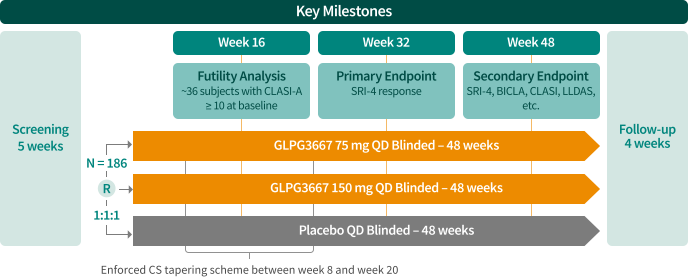
On December 18, 2025, we announced topline results from the GALACELA study, which are summarized below:
In the GALACELA SLE study, GLPG3667, administered once daily at 75 mg (N=59) and 150 mg (N=64) in addition to standard-of-care therapy, the primary endpoint analysis of dose-response on SLE responder index (SRI)-4 at Week 32 did not meet statistical significance. However, GLPG3667 showed numerical improvements over placebo (N=63) on several secondary endpoints, particularly on skin-related outcomes. The safety profile was consistent with previous studies with GLPG3667. The GALACELA study is currently ongoing, and the final Week 48 data, expected in the second quarter of 2026, will be essential to assess the totality of the evidence and determine potential next steps for the SLE program.
4 4Goreshi R, et al. Quality of life in dermatomyositis. J Am Acad Dermatol. 2011 Dec;65(6):1107-16.
5 5Marie I. et al. Morbidity and mortality in adult polymyositis and dermatomyositis. Curr Rheumatol Rep. 2012 Jun;14(3):275-85.
6 6DeWane ME, et al. Dermatomyositis: Clinical features and pathogenesis. J Am Acad Dermatol. 2020 Feb;82(2):267-281.
7 7Minimal improvement per ACR/EULAR is defined as a total improvement score (TIS) of >= 20 points. The TIS is a score derived from the evaluation of the results from 6 core set measurements of myositis disease activity.
8 8M-CDASI-A: Modified Cutaneous Dermatomyositis Disease Area and Severity Index Activity.
9 9Rees, F. et al., (2017). The worldwide incidence and prevalence of systemic lupus erythematosus: a systematic review of epidemiological studies. Rheumatol. Oxf. Engl., 56(11), 1945–1961.
10 10González, L. A. et al (2013). Ethnicity in systemic lupus erythematosus (SLE): its influence on susceptibility and outcomes. Lupus, 22(12), 1214–1224.